- by foxnews
- 06 Oct 2026
Mysterious 3,000-year-old hoard with violently smashed sword emerges during construction project
Metal detecting led archaeologists to a Bronze Age hoard of deformed sickles, a shattered sword blade and ingots deposited in a flooded Czech Republic wetland.
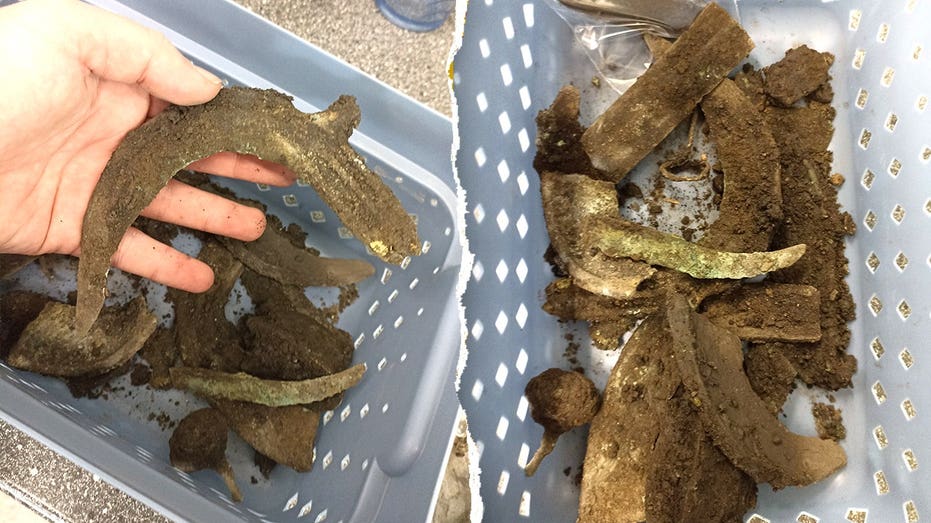
The cache, discovered near Kojetin in central Moravia during archaeological work connected to a railway project, contained an assortment of worn and broken bronze objects.
The artifacts included eight deformed sickles, one intact sickle, part of a sword blade, ornament fragments, three ingots and two unfinished objects.
"Use-wear analysis has shown that most of the bronze objects had been used before their deposition and that some were deliberately damaged," ACO officials said in a statement.
Pictures show the mud-covered Bronze Age artifacts shortly after their discovery.
The sword bore particularly dramatic signs of damage, with archaeologists concluding that it had been struck apart with a single powerful blow.
"[It was] probably delivered with a chisel or an axe, while several of the sickles were intentionally deformed," the ACO release read.
"We knew our work was continuing in an area occupied by an extensive prehistoric settlement, so we also used metal-detecting survey during the archaeological monitoring," said Záhorák.
"It was this method that led to the discovery of the bronze hoard," he added.
While it may seem plausible that the tools were concealed as a temporary hiding place, officials say the evidence points to a more ceremonial purpose.
"The current interpretation instead suggests that the objects were deliberately deposited in a former wetland and that their deposition may have formed part of a ritual practice," the statement said.
Officials noted that the Kojetin discovery has parallels with other Bronze Age sites.
"In some of these cases, archaeologists have considered a possible connection with ritual practices. Further specialist analyses will help determine whether the Kojetin hoard had a comparable significance."
The artifacts are currently undergoing conservation and analysis by specialists.
you may also like


- by foxnews
- 06 Oct 2026
Elite CEOs pay $20K to endure a psychedelic 'hell ride' that rewires the human brain
- by foxnews
- 06 Oct 2026
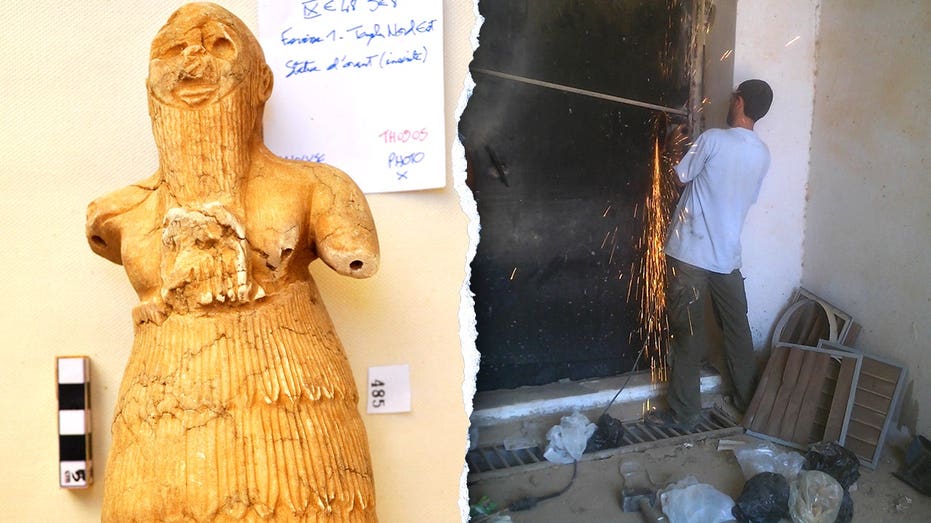
30,000 ancient treasures saved from ISIS in daring archaeological rescue



travel
- by foxnews
- descember 09, 2016
Woman's routine Uber ride takes alarming turn after her driver misses the exit
A viral TikTok video describes an Uber passenger's 3 a.m. ride turning alarming when her driver asked to stop at a parking garage to charge his EV. Experts weigh in.
read more